

Start, Stop, Continue: Turning Leadership Reflection into Action


As leaders, we spend considerable time focused on the future. Where are we headed? What needs to change? How do we get there? But some of the most valuable insights come from looking back and considering what our experiences have taught us. What challenged our assumptions? What worked better than expected? What would we approach differently if given the opportunity? These are questions worth asking because the decisions we make about the future should be informed by what we've learned along the way.
Three Questions Worth Asking
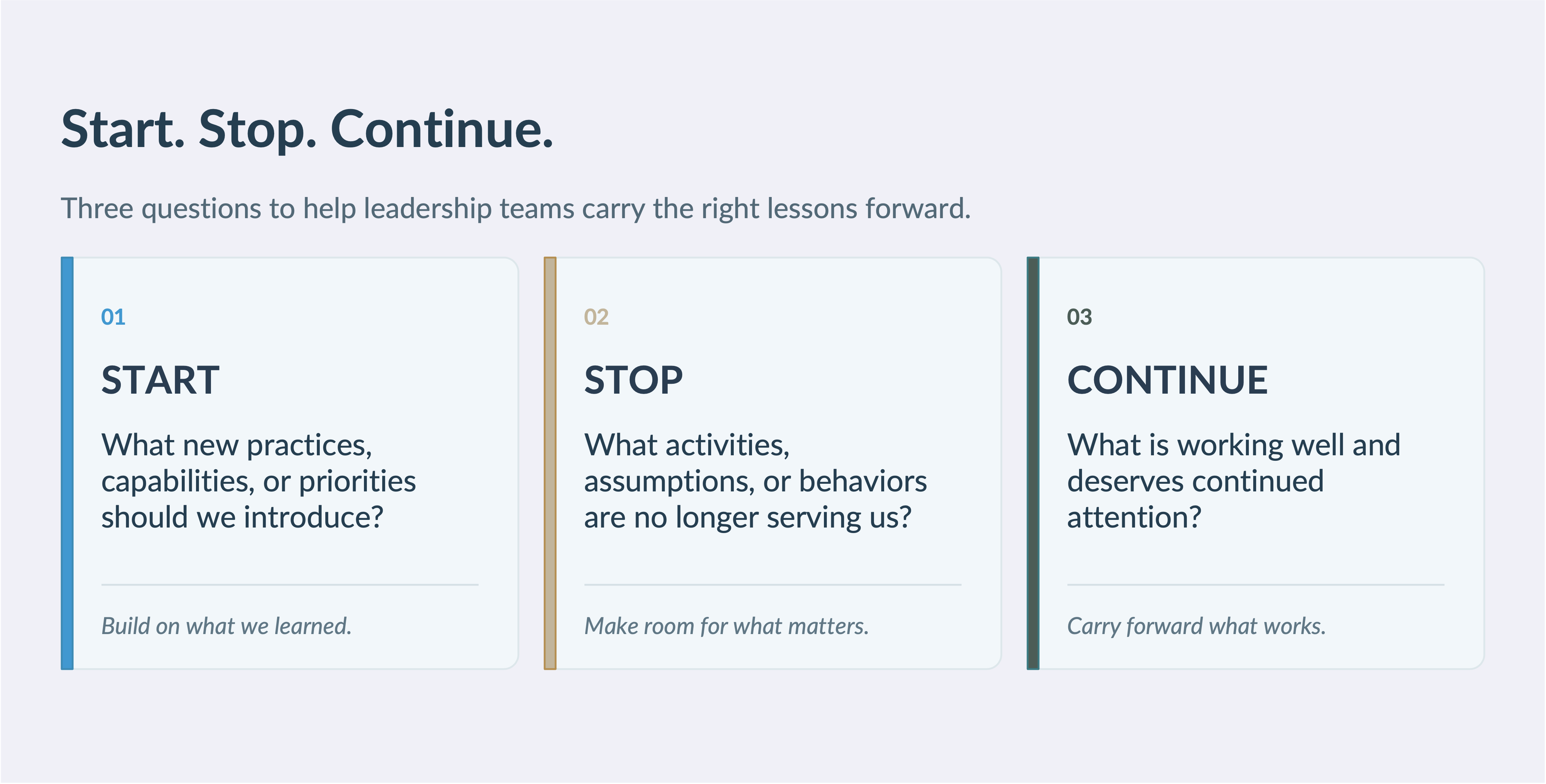
At Bâton, we've used a simple Start, Stop, Continue exercise with organizations to encourage reflection and identify practical changes. The exercise asks leaders to consider what they should begin doing, what they should leave behind, and what is working well enough to preserve. While the questions are straightforward, the conversations they generate can reveal important differences in perspective and help teams become more intentional about where they focus their time and resources.
1. What should we START doing?
One place to begin is by considering what recent experiences have revealed about the capabilities, practices, or priorities your organization needs to develop. Perhaps an organization has grown rapidly but has few employees prepared to step into leadership roles. Rather than waiting until a critical vacancy occurs, leadership could begin identifying emerging talent, providing mentoring or coaching, and creating opportunities for employees to take on greater responsibility. In another organization, employee feedback may have repeatedly surfaced concerns about communication, yet there is no consistent process for gathering input or following up. Introducing regular listening sessions and communicating what leadership has learned and intends to do could be a worthwhile place to start.
The challenge is determining which new practices will make a meaningful difference. Most organizations already have more ideas than they have the capacity to pursue, so the objective shouldn't be to add initiatives for the sake of doing something new. Instead, leaders should focus on the gaps or opportunities that have become apparent through experience and identify where a change in approach could have the greatest impact.
2. What should we STOP doing?
Deciding what to stop can be more difficult than identifying something new to pursue, particularly when existing activities have become part of how an organization operates. In their Harvard Business Review article, “Too Many Projects,” Rose Hollister and Michael Watkins describe the problem of initiative overload, where organizations continue adding projects while struggling to discontinue those that no longer support their strategy. Over time, those competing demands can stretch employees and resources thin, making it harder to execute even the most important priorities.
Consider a leadership team that continues approving new initiatives despite falling behind on existing commitments. Rather than expecting employees to accomplish more with the same resources, the team could take a closer look at its current portfolio of work and determine which activities are contributing to strategic priorities and which should be postponed or discontinued. This kind of review can also extend to longstanding programs, processes, and meetings that may have served a purpose at one time but are no longer as valuable. One question I find particularly useful is: If we weren't already doing this, would we choose to start it today? It can be a helpful way to challenge assumptions and make room for work that deserves greater attention.
3. What should we CONTINUE doing?
Reflection shouldn't focus exclusively on what needs to change. Organizations also benefit from recognizing the practices and relationships that are contributing to their success, particularly those that might be overlooked when attention shifts to the next challenge or priority.
For example, an organization may have involved employees, customers, or community partners in developing its strategic plan and discovered perspectives that helped shape its direction. Rather than treating that engagement as a one-time activity, leadership could continue those conversations as the plan is implemented and circumstances evolve. The same consideration applies to leadership development, collaboration across departments, or employee recognition practices that have helped strengthen organizational performance and culture. These activities can be easy to deprioritize when resources are tight, but understanding why they have been effective can help leaders make more informed decisions about what deserves continued investment.
From Reflection to Action
One of the benefits of Start, Stop, Continue is that it creates an opportunity for leaders to compare perspectives that might not otherwise surface in day-to-day conversations. What one person considers an essential meeting, another may see as an obstacle to getting work done. A program that one department views as highly valuable may be consuming resources that another believes could be better used elsewhere. These differences aren't necessarily a problem. They can help uncover unclear expectations, competing priorities, and assumptions that deserve a closer look.
Of course, the exercise is only useful if the discussion leads somewhere. Rather than ending with three long lists of suggestions, leadership teams should identify a manageable number of commitments, determine who will be responsible for moving them forward, and agree on how progress will be evaluated. A team might decide to strengthen succession planning for critical roles, discontinue a few initiatives that are no longer delivering sufficient value, and establish quarterly conversations with key stakeholders. Revisiting those commitments over time provides an opportunity to assess what's working and make adjustments when needed.
Ultimately, reflection should do more than help leaders appreciate what they've accomplished or recognize what hasn't gone as planned. It should inform the choices they make about where to invest their attention, what to change, and what is worth preserving. The real test of reflection isn't what leaders learn, but what they decide to do differently.
Sign UP to receive related Insights


Related Case STudies
View case studies

Trending Topics
View All


Schedule Your Session Today
Enter your information below and our team will contact you.