

The Power of Quarterly and Year-End Reviews

Effective strategy execution depends on consistent monitoring and course correction. Quarterly and year-end reviews create structured intervals for maintaining alignment, identifying emerging obstacles, reinforcing accountability, and directing focus toward critical priorities. These regular checkpoints provide the framework organizations need to execute their strategies effectively.
B|G has found that consistently reviewing and monitoring an organization’s developed strategy is one of the essential steps in the effective execution of strategy. A great way to implement this tip is by performing quarterly and year-end reviews.
Quarterly reviews provide on demand coaching and assistance with strategy, project management, research, team development, problem solving, and accountability. On the other hand, year-end reviews offer a more holistic view of company performance, ensuring alignment with long-term goals and expectations.
To better understand the value of these business review practices, it is helpful to examine the key benefits, the types of agenda topics they typically include, the outcomes they produce, and real examples from B|G client engagements.
- Benefits: Quarterly and year-end reviews function not only as effective tools for monitoring strategy, but also as great methods for keeping an organization aligned with its priorities, identifying challenges early, and maintaining clear communication across teams. These review practices can reinforce accountability, increase employee engagement, and provide resources to ensure efforts remain focused on the most important initiatives. By implementing these checkpoints and review processes into the year, organizations gain a structured way to monitor, adapt, and continue moving forward.
- Types of Agenda Topics: Although every organization has unique needs, there are certain topics that commonly appear in effective review sessions. These often include discussions from Strategic Planning Committee (SPC) meetings, Executive Committee meetings, and Quarterly meetings. These essential sessions serve to evaluate key milestones, assess performance metrics, and address any challenges or evolving priorities. Additionally, they highlight successes and insights gained, ensuring the organization is confident in their future direction. Collectively, these agenda topics provide a comprehensive view of performance and help guide next steps.
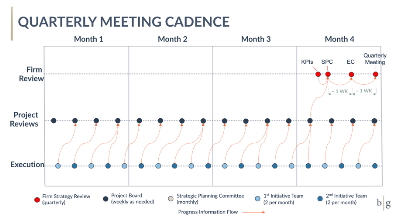
- Review Outcomes: When performed correctly, quarterly and year-end reviews can result in a clearer sense of direction and stronger alignment. Leaders walk away from the sessions with a shared understanding of what is going well, what areas need adjustments, and where to put their attention and focus next. Reviews narrow down and refine priorities, strengthen accountability for key initiatives, and generate greater transparency across the organization.
Client Example
Organizations across varying industries have seen meaningful results from implementing structured review practices. Quarterly reviews have helped teams find areas of improvement, adjust timelines, and resolve barriers that were slowing down progress. Year-end reviews have supported organizations in realigning goals and setting clearer expectations for the upcoming year.
A great example of when a B|G client has pivoted its strategy because of a proper review process comes from a business law firm. The firm had several initiatives deemed critical to their success. However, it became clear that prioritizing these initiatives was crucial to provide direction and better focus its efforts.
Following a review session, the firm determined that having additional support around sales and marketing was essential. The law firm focused on a few initiatives in this area, including creating a sales and marketing function. Another priority was to encourage everyone in the firm, regardless of department, to collaborate on the firm’s business development. As a result, they adjusted their approach, sharpened their focus, and found a direction that better aligned with their goals and vision.
Sign UP to receive related Insights


Related Case STudies
View case studies

Trending Topics
View All


Schedule Your Session Today
Enter your information below and our team will contact you.