Global oil prices surged after tanker traffic through the Strait of Hormuz — a vital trade route through which roughly 20% of the world’s oil supply passes — effectively halted. While markets reacted quickly, Mitchell emphasized that current price movements are largely driven by expectations, not physical supply shortages.
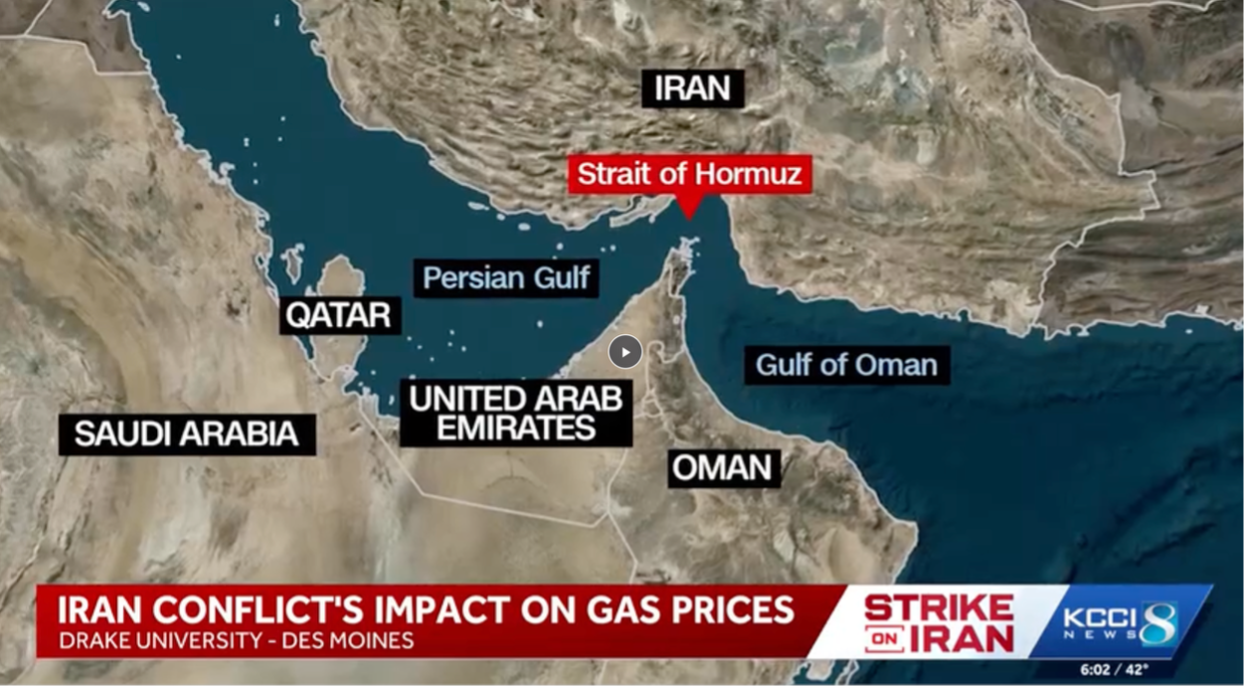
“What we are experiencing right now is volatility driven by expectations, not by production,” Mitchell said.
He noted that it could take days or even weeks before sustained supply disruptions meaningfully affect domestic gas prices. The longer-term impact will depend on how long the conflict lasts and whether other oil producers can offset potential losses from Iran.
“We’re still trying to figure out how long this conflict will take and what the broader regional impact will be. Can other producers make up for the oil shipments out of Iran? Those are the questions we have to stay tuned to.”
Oil prices influence transportation and logistics costs, which ripple through supply chains and impact the price of goods ranging from groceries to airline tickets. Economists often estimate that sustained increases in crude oil prices can push headline inflation higher, which in turn may affect Federal Reserve interest rate decisions, borrowing costs, and overall business investment.
If disruptions are brief, impacts may be temporary. However, prolonged instability in a region critical to global energy flows could create sustained cost pressures for households and businesses alike, making the duration of the conflict the key economic variable.
This type of uncertainty illustrates a broader reality facing today’s leaders. The current upheaval in Middle East energy markets underscores how volatility, uncertainty, complexity, and ambiguity (VUCA) increasingly define today’s business environment. In moments like this, leaders are forced to make decisions amid incomplete information, shifting market signals, and global interdependencies — reinforcing the importance of adaptive strategies and resilient leadership.
Enter your information below and our team will contact you.